

CSEL Events
Check Out Our CSEL Schedule!
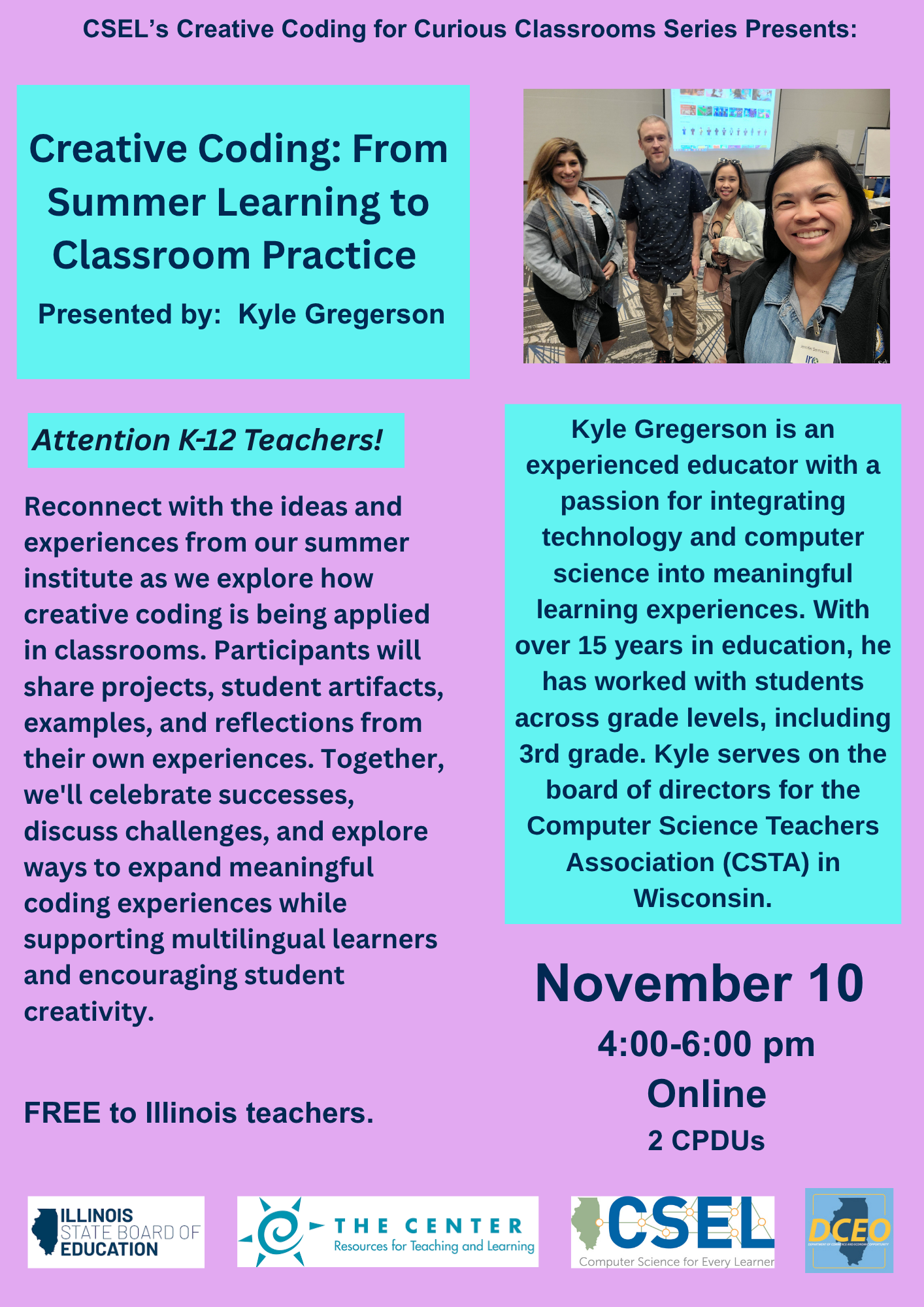
Creative Coding: From Summer Learning to Classroom Practice
Tuesday, November 10, 2026 · 4:00 PM – 6:00 PM · 2 CPDUs 📍 Virtual Zoom
Reconnect with the ideas and experiences from our summer institute as we explore how creative coding is being applied in classrooms. Participants will share projects, student artifacts, examples, and reflections from their own experiences. Together, we’ll celebrate successes, discuss challenges, and explore ways to expand meaningful coding experiences while supporting multilingual learners and encouraging student creativity.
Presenters:
Kyle Gregerson is an experienced educator with a passion for integrating technology and computer science into meaningful learning experiences. With over 15 years in education, he has worked with students across grade levels, including 3rd grade. Kyle serves on the board of directors for the Computer Science Teachers Association (CSTA) in Wisconsin, where he helps plan workshops and professional learning opportunities for educators across the state. Beyond the classroom, he also helps design and lead family events at a museum, creating hands-on experiences that bring learning, creativity, and community together. He is committed to helping teachers discover innovative ways to integrate computer science into their teaching while connecting learning to student interests and real-world experiences.
CSEL PD Series: Creative Coding for Curious Classrooms (K-12)
Creative Coding: Code Like a Beginner by Sylvia Aguiñaga
Creative Coding: Code Like a Beginner by Sylvia Aguiñaga
Monday, November 16, 2026 · 4:00 – 6:00 PM · 2 CPDUs · Virtual
Students learn code the way they learn language. They learn to problem solve the way they play. In this virtual workshop, educators get hands-on with Star Stuff Edu, a free, browser-based coding game, and play long enough to get stuck, try again, and find a second way through. Along the way, we’ll name the habits of computational thinking as they happen: tinkering, iteration, reflection. And we’ll look at what shifts when a wrong answer becomes information instead of a verdict. We’ll talk about how teachers can model this in the classroom by narrating their own uncertainty, thinking aloud as beginners, and letting students watch them figure it out. Educators leave with low-prep ways to introduce coding through play, plus Star Stuff Edu’s lesson plans, solution videos, and classroom resources.
Presenter:
Sylvia grew up playing Nintendo games in her family’s bodega, often relying on her older brothers to beat levels for her. She didn’t believe she could do it herself. Beyond the screen, a pattern was forming – Sylvia avoided anything she thought she might fail at. This fear of failure shadowed her throughout college, where she witnessed her body and mind react to stress and pressure.
Her transformation didn’t happen in a classroom but in rural Japan, where she taught herself programming without fear of judgment. There, she created a safe space to learn, fail, and grow—something that has shaped every step of her career.
As Director of Curriculum & Creative Director at nonprofits focused on empowering youth in computer science, Sylvia recognized the need for more spaces where failure is part of learning. Now CEO & Game Designer at Ánimo Games, she creates playful, engaging experiences like Star Stuff, a programming puzzle game, the Star Stuff Edu Project to foster playful problem-solving in schools, and most recently, CouchGames.com, a home for cooperative puzzle games.
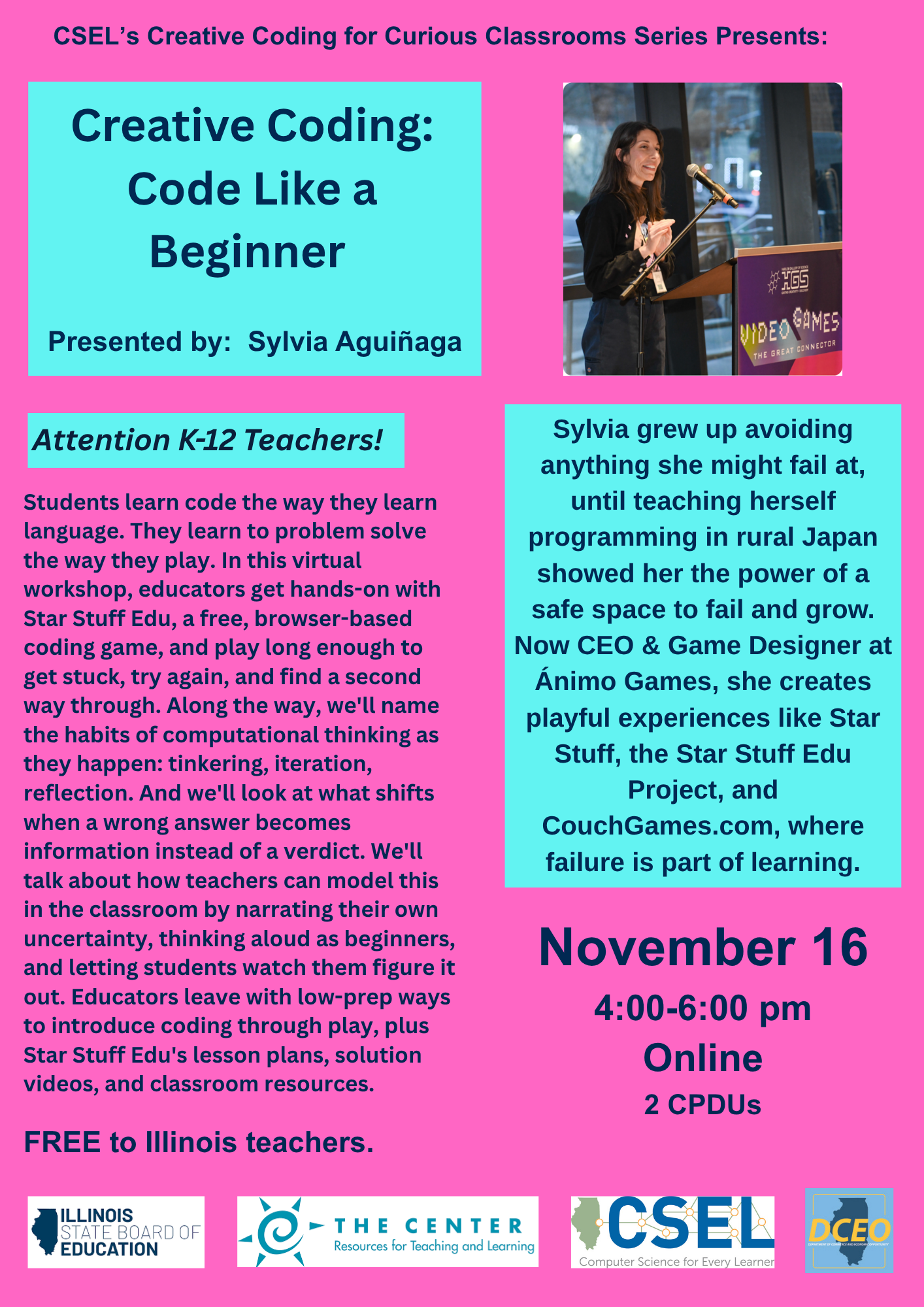
Scaffolding for ELs Part 1: K-5
Tuesday, November 17, 2026 · 4:00 – 6:00 PM · 2 CPDUs · Virtual
K-5 Educators: Join this session to discover how scaffolding CS learning increases accessibility for K-5 English Learners. We will model how to identify computer science (CS) and computational thinking (CT) concepts, practices, and skills within non-CS subject areas. Then, we will practice various instructional techniques and programming activities that support opportunities to meaningfully engage K-5 English Learners in grade-level CS learning, as well as increase skills in language development and executive functioning.
In this session, participants will:
● Identify what you already know about computer science
● Learn how scaffolding CS learning increases accessibility for multilingual learners/ ELs
● Create and support opportunities to meaningfully engage ELs in grade-level learning across multiple content areas
Presenter:
Charity Freeman, Independent Consultant, CS for Success
Charity Freeman brings extensive experience in teacher education and curriculum development to every professional learning experience she designs for teachers and administrators. A nationally recognized leader in CS and AI education, she served as Chair of CSTA’s Board of Directors (2022-26), and continues to lead, advise, and support several national initiatives on technology design, AI literacy, and education policy in K-12 and higher education. Prior to transitioning to the University of Illinois as a teacher educator and PhD student, focusing on building teacher capacity in computer science at the middle and high school levels, Charity supported Chicago Public Schools students as a college/career coach, taught business and computer science courses in Grades 7-12, and led a Professional Learning Community of CS educators in the city’s south, west, and southwest neighborhoods, in partnership with the district’s Office of Computer Science.
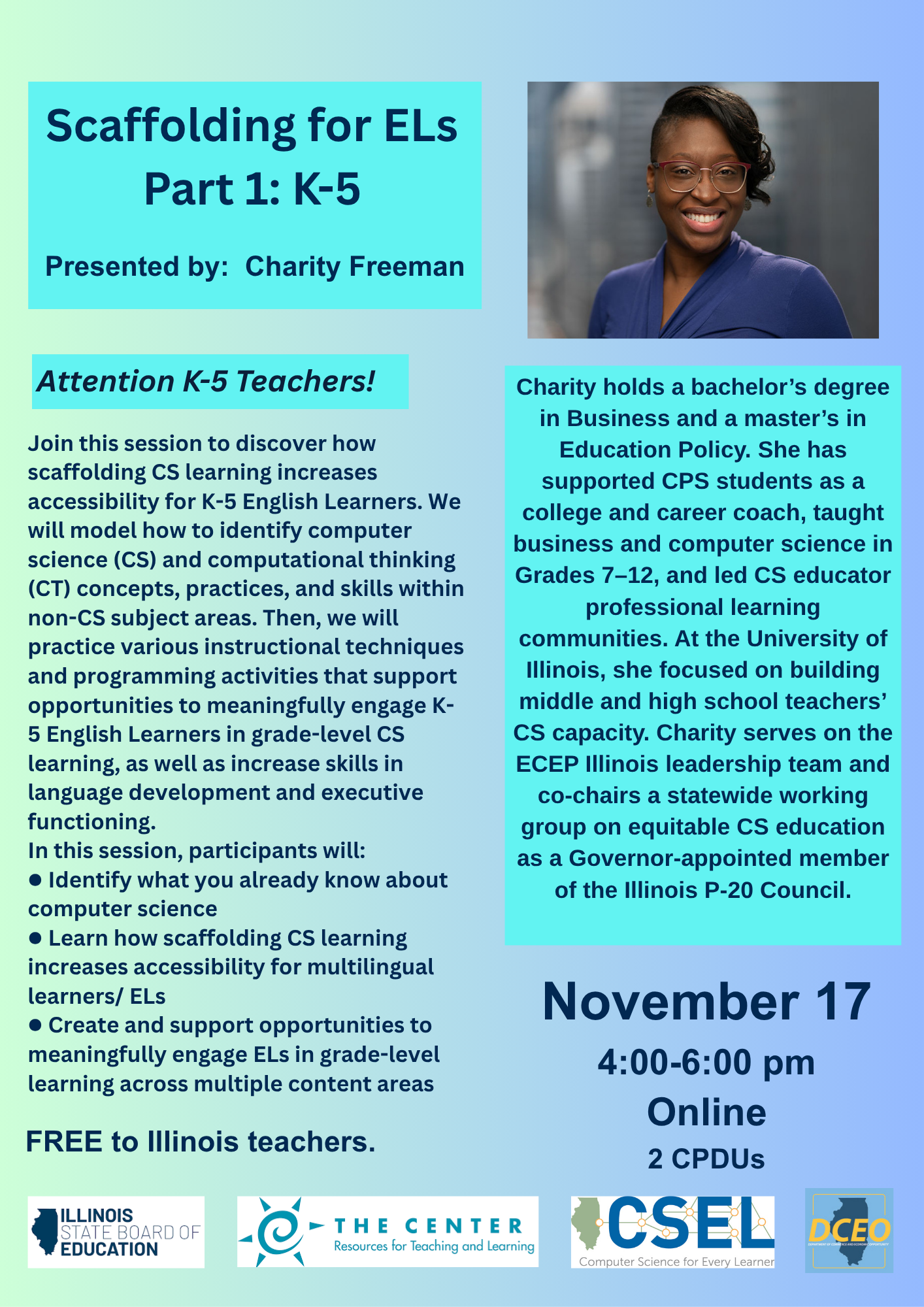
Prompting Possibilities: Using AI with Multilingual Learners
Thursday, November 19, 2026 · 4:00 – 6:00 PM · 2 CPDUs · Virtual
Explore practical ways AI can support language development, increase access to content, and facilitate the creation of more engaging learning experiences for multilingual learners. Participants will consider how to use AI intentionally and responsibly while maintaining the relationships, rigor, and language-rich interactions at the heart of effective instruction. Educators will leave with concrete examples of activities they can do with students immediately.
Presenter:
Maggie Essig is an Education Specialist at the Illinois Resource Center and a leader in multilingual education. With experience as a teacher, administrator, professional learning designer, and consultant, she designs and facilitates professional learning focused on Multilingual Learners, innovative instruction, and educational technology. Her work is grounded in a belief that educators thrive when they have the tools, support, and inspiration to try something new. Maggie is passionate about creating equitable, engaging learning experiences where language, learning, technology, and possibility intersect.
CSEL PD Series: Creative Coding for Curious Classrooms (K-12)
A hands-on professional learning series that helps educators bring creative coding and computational thinking into meaningful classroom experiences — for multilingual learners, at any grade level, in any content area, with any level of coding experience.
The series kicks off with an in-person workshop, where participants experience computational thinking as learners, explore the creative possibilities of ScratchJr, and start designing a classroom-ready learning experience aligned to their own curriculum. Two optional virtual follow-up sessions give educators time to try new ideas in their classrooms, then return to a supportive community to share what they learned, gain fresh ideas from colleagues, and keep building their creative coding practice.
Join us whenever you can — attend one session or all three. Everyone is welcome. No coding experience required — just curiosity!
8.5 CPDUs available across the full series.

Series at a Glance
| Sign up for each session individually | Date | Time | Format | CPDUs |
| Session 1: In Person Kick off-Explore, Experiment, Design, and Share | Sat, Sept 26, 2026 | 9:30 AM – 2:00 PM | In person — IRC Center, Arlington Heights | 4.5 |
| Session 2: Virtual Follow Up Workshop: ScratchJr Challenge & Classroom Connections | Thu, Oct 15, 2026 | 4:00 – 6:00 PM | Virtual | 2 |
| Session 3:
Title: Creative Coding: Code Like a Beginner presented by, Sylvia Aguiñaga.
|
Thu, Nov 16, 2026 | 4:00 – 6:00 PM | Virtual | 2 |
Session 1 — In-Person Kickoff
Explore, Experiment, Design, and Share
Saturday, September 26, 2026 · 9:30 AM – 2:00 PM · 4.5 CPDUs 📍 IRC Center, 2626 S Clearbrook Dr, Arlington Heights, IL
In this session, participants experience computational thinking as learners, explore ScratchJr, and begin designing a classroom-ready learning experience for their students. Through collaboration, reflection, and peer feedback, educators gain practical tools and develop a playful mindset — tinkering, experimenting, iterating, and reflecting — as they build the confidence to integrate creative coding into meaningful teaching and learning experiences.
Session 2 — Virtual Follow-Up
ScratchJr Challenge & Classroom Connections
Thursday, October 15, 2026 · 4:00 – 6:00 PM · 2 CPDUs · Virtual
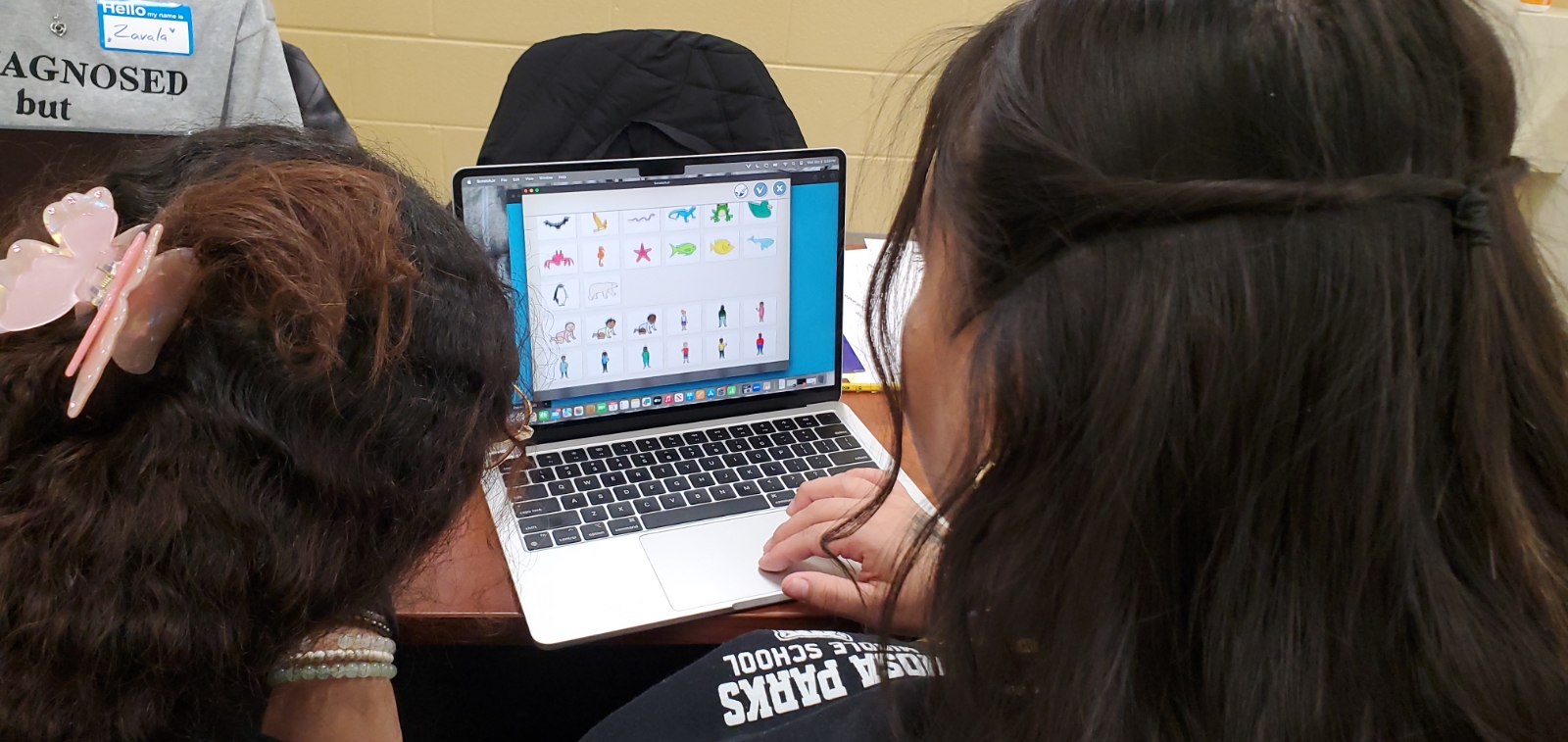
In this interactive virtual session, participants take part in a fun ScratchJr design challenge, enjoy dedicated tinkering time to experiment with new features and ideas, and hear from classroom teachers who have piloted creative coding in their own content-area teaching. Whether you’ve already tried your lesson or are still planning your first implementation, you’ll leave with fresh ideas, renewed confidence, and inspiration.
Creative Coding: Code Like a Beginner presented by Sylvia Aguiñaga.
Create, Share & Inspire
Thursday, November 16, 2026 · 4:00 – 6:00 PM · 2 CPDUs · Virtual
Students learn code the way they learn language. They learn to problem solve the way they play. In this virtual workshop, educators get hands-on with Star Stuff Edu, a free, browser-based coding game, and play long enough to get stuck, try again, and find a second way through. Along the way, we’ll name the habits of computational thinking as they happen: tinkering, iteration, reflection. And we’ll look at what shifts when a wrong answer becomes information instead of a verdict. We’ll talk about how teachers can model this in the classroom by narrating their own uncertainty, thinking aloud as beginners, and letting students watch them figure it out. Educators leave with low-prep ways to introduce coding through play, plus Star Stuff Edu’s lesson plans, solution videos, and classroom resources.
