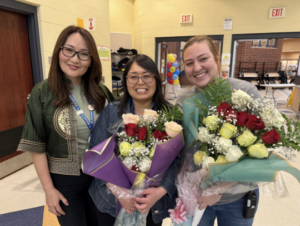
 At first, Raquel Kim wasn’t sure why the ambassador wanted to meet with her.
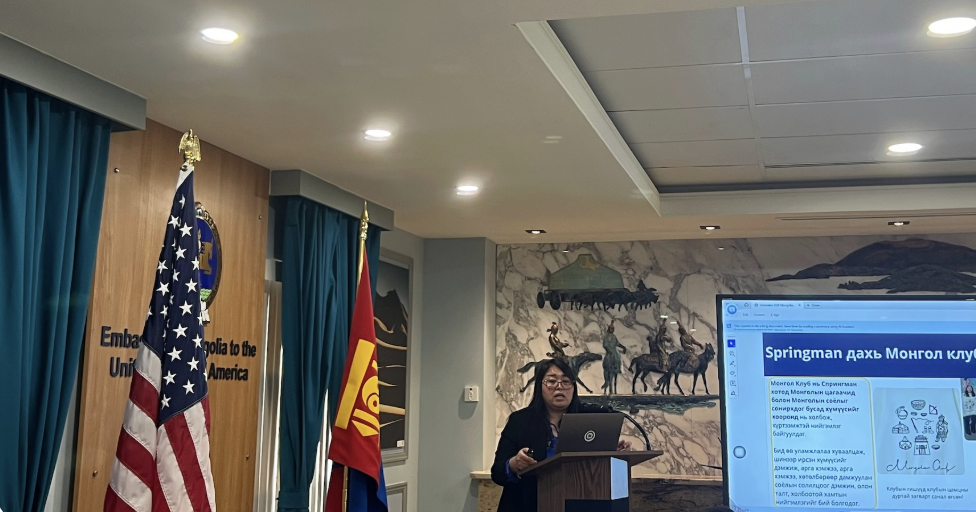
But the Embassy of Mongolia wanted Kim, the Assistant Superintendent for Multilingual Services for Glenview School District 34, and her team to share the lessons learned supporting Mongolian-language education and programming for families. And that’s just what they did this past October, convening with Mongolian language educators from all over the world.
“It was surreal for sure,” Kim says. “I understand the efforts that we’ve made and believe other school districts have made an impact on establishing the home language and that bilingual support. It was an honor to meet the representative from the embassy at the consulate and to be recognized for the effort our families and our staff have put together when we put this forward.”
In 2018, District 34 established their first Bilingual Parent Advisory Council for Mongolian parents and caregivers, representing the district’s fastest-growing group of multilingual learners. As they began building relationships with these parents, they kept hearing a chief concern—their children losing the Mongolian language and culture.
“Their kids were refusing to use the home language,” Kim says. “They kept falling into this pattern of wanting to use the dominant language, and parents were worried students wouldn’t be able to communicate with them or other elders. What could we do to help our students understand the importance?”
The concerns were clear, but there were challenges—among them, there were no PEL-certified teachers in the area proficient in the Mongolian language. Eventually, with the focus on student support, they worked with local communities to find Mongolian language teachers who primarily worked on the weekends, and built out programming. After years of planning with the BPAC, the district launched an after-school program highlighting Mongolian language and culture in 2022.
The district is now in its third year of offering after-school Mongolian language programming, with an emphasis on project-based learning to bolster student engagement. Since the launch, the district has hired a Mongolian Community Coordinator, and last school year, they hired their first Mongolian bilingual-certified teacher. All along the way, the district and BPAC have hosted cultural and support events for Mongolian students and their families, from discussions of mental health in the heritage language to family game nights to Lunar New Year celebrations.
At the beginning of 2025, the Consulate of Mongolia in Chicago caught wind of District 34’s efforts and attended their annual Asian American, Native Hawaiian, and Pacific Islander Heritage Showcase to recognize the district and Kim specifically for their work supporting Mongolian families.
From there, the Embassy of Mongolia in Washington, D.C. heard about District 34’s work and asked Kim and her team to present to Mongolian language teachers from all over the world, including teachers from all over the United States, Japan, Germany and Turkey.
In a number of districts with large Mongolian EL populations, some educators were wondering why their own districts were not offering the same level of instruction. Kim says the Illinois State Board of Education’s emphasis on the role of BPACs and actively listening to the concerns of BPAC members, as well as having resources allocated to address the needs of BPACs, played a pivotal role in the establishment of their program. “We want students to see the value in their home language, so we committed to using BPAC dollars for Mongolian language instruction,” Kim says.
Perhaps even more importantly than the international diplomatic recognition is the community and connection. Parents have already reported that their kids are much more inclined to use Mongolian, and at the district’s middle school, students can join a Mongolian club to dive deeper into language and culture while making new friends.
“Kids who are not native Mongolian speakers have joined the club because they’re interested in learning about the culture and some of the vocabulary,” Kim says.
The Mongolian program has led to exciting academic strides as well. Last year, the district established their first group of Pathways to the Seal of Biliteracy, which students met with enthusiasm, with some pursuing Pathways in English, Mongolian and French or Spanish.
“Our 8th graders showed great excitement in terms of maintaining their language, and that was rewarding to see,” Kim says.
In addition to the strength of the collaboration between the district and the Mongolian BPAC, Kim says the support of the school board has been instrumental in pursuing this project. Students in the Mongolian language program even attended a board meeting over the summer and shared how grateful they were for the board’s commitment to the Mongolian club and the pathways to the Seal of Biliteracy.
The most important piece of advice that the Glenview District 34 team shared with the group at the embassy—which Kim says is the most important piece of advice she can offer districts wanting to replicate the success of their Mongolian programming—is that none of this was possible without collaboration.
Kim advises districts to identify parents who are representative of the student group districts are looking to support, who understand the importance of their input and are willing to make the time commitment. The members of Glenview’s Mongolian BPAC meet almost weekly to take the time for regular feedback and establishing strong relationships. An essential part of that relationship building is not just accepting the feedback, but taking actionable steps to address their concerns.
“It’s not good enough just to listen, collect feedback, take survey information,” Kim says. “If you don’t act on what they’re asking for, they won’t return because they will see it’s going nowhere.”
The team at Glenview District 34 is not done yet, though. They are working with the Ministry of Education in Mongolia and the Heritage Mongolian Group in Washington, D.C. to establish Mongolian Language Arts standards, much like the Spanish Language Arts Standards set by ISBE. The intent, Kim says, is for these standards to be replicable to any public school system, and to ensure that they are complementary to what students learn in English. And that’s not all—in the summer of 2026 or the following year, the district hopes to hold a conference of Mongolian language teachers, to gather and share strategies of what is working in the American educational setting.
At the embassy, Kim learned that in Mongolia, parents typically are not involved in the educational system in terms of giving input, but rather educators are entrusted to care for whatever is needed. When her team shared research with the BPAC parents that showed that relationships between home and school would accelerate and improve academic performance, the parents took that to heart.
“Our students do well academically, but we also wanted to support their SEL development,” Kim says. “We don’t want them to lose their culture. We don’t want them to lose their identity. One thing we know is if we don’t value their home language in a more public setting, it’s easier to lose it and the only way to really show we value it is to do something with it.”