|
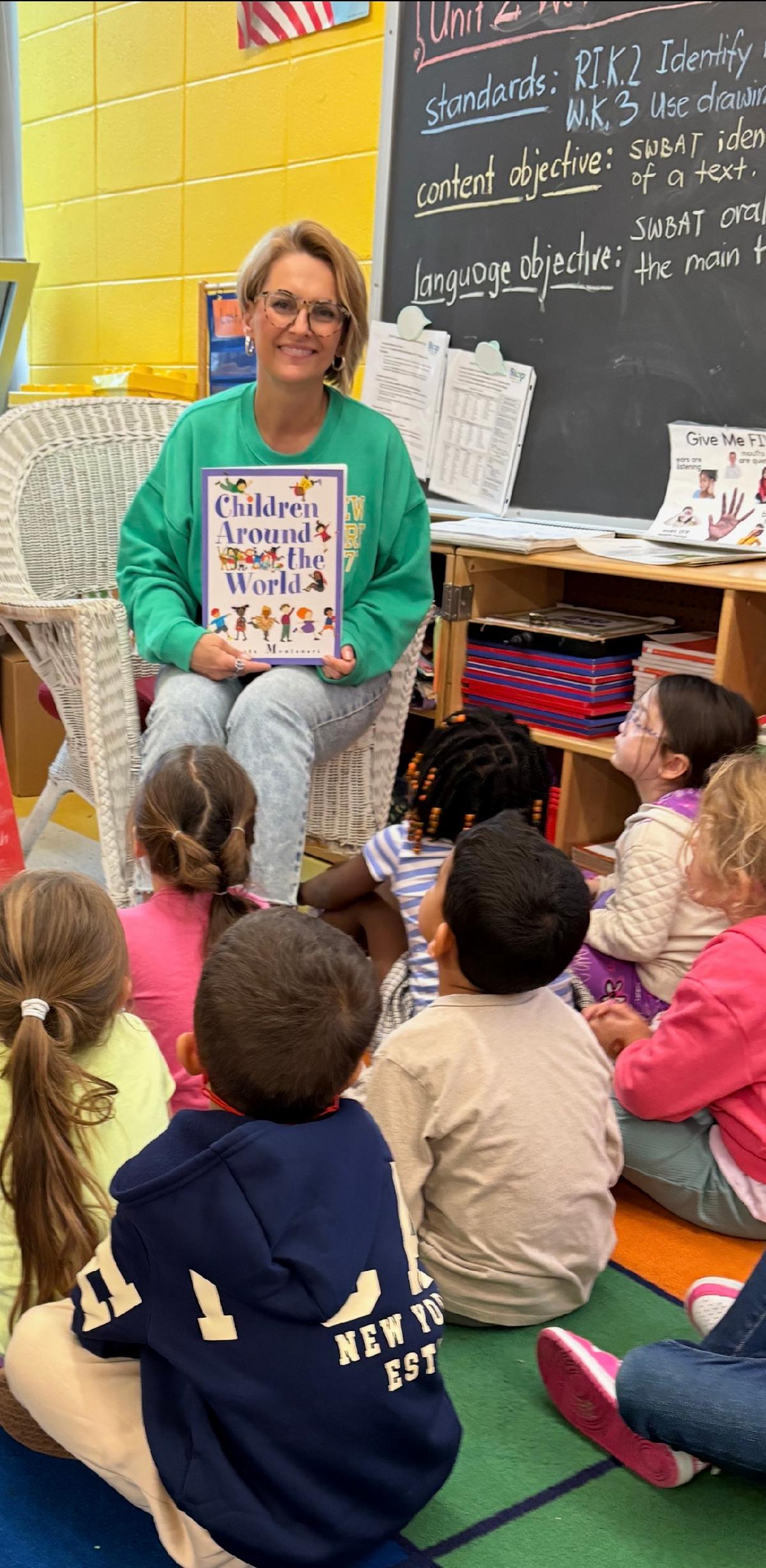

The IRC has asked members of our community to nominate Illinois teachers working with multicultural, multilingual students who are going above and beyond, and now, we’re celebrating them and highlighting their work. Keep an eye out for these features in the coming months – and if you’d like to nominate someone, email leanet@cntrmail.org. Next up is Victoria Kuzinski from North Palos District 117.
Says Barbara Dziatkowiec, who nominated her: “With unwavering dedication, Vicki has created a supportive and engaging environment where every child feels safe to take risks and explore the English language. She weaves language development into every aspect of the curriculum, using interactive and collaborative EL strategies to build language skills, especially oracy, in her classroom. Vicki celebrates the diverse linguistic backgrounds of her students, recognizing their native languages as assets and incorporating them into her instruction whenever possible. She knows that fostering strong literacy skills is essential and is passionate about empowering her students to become confident readers and writers who are ready to embrace the challenges and opportunities that lay ahead in 1st grade and beyond.”
For elementary educator Victoria Kuzinski, developing empowered multilingual learners starts at home. Her two children speak Polish at home, and are fluent in English and Polish, and that same approach informs her teaching.
“I want my students to know that their home language is an important part of who they are,” she said. “I want them to feel proud of their language and culture while becoming confident English speakers.”
That journey and confidence-building is very important to Kuzinski. When she moved from teaching middle school to kindergarten, she saw firsthand how her knowledge of her students’ heritage language was essential to making them feel supported and welcome in the classroom.
“I realized that being bilingual was not just something I could use to communicate with my students—it was something I could use to build trust and make children feel that they belonged,” she said. “That has become one of the things I value most about being a multilingual educator.”
Kuzinski believes children learn best, especially the littles, when they feel safe, understood and valued. She does not want language to become a barrier to their self-expression, so she employs visuals, gestures, repetition, songs, movement and conversation to invite participation and understanding and help her students build confidence with English.
That employment of heritage language and confidence building extends to her approach to family engagement as well. Kuzinski believes being able to communicate with families in their heritage language can make them feel heard and receptive to her as a partner in their children’s education, and that process starts with the open house and parent orientation.
For Kuzinski, the most meaningful moments are often the little ones. When a quiet or hesitant student slowly begins to participate by raising their hand, talking to a friend or answering a question, even coming up to her and sharing something about their home life, can be a highlight of her day.
“One of the best feelings as a teacher is when a child who was once afraid to use English suddenly starts code-switching or talking without worrying about making a mistake,” she said. “That’s when I know that the classroom environment is working. I know that I have helped create a place where that child feels safe enough to take a risk, and that means a lot to me.”
Her advice to her fellow educators is simple — don’t underestimate yourself and your gifts.
“Your language, your experiences, and your understanding of different cultures are your strengths,” she said. “Use them!”
She also emphasized wisdom that educators know all too well — that the most important thing a child will remember is how you made them feel and the time you spent with them. What may be small moments for us are monumental for students, so she advised celebrating the victories no matter how small, and letting your personality and humor shine with students.
“Our job is not only to teach children another language,” she said. “We are helping them find their voice, build confidence, and understand who they are and where they come from. That is something I feel very proud to be a part of!”